

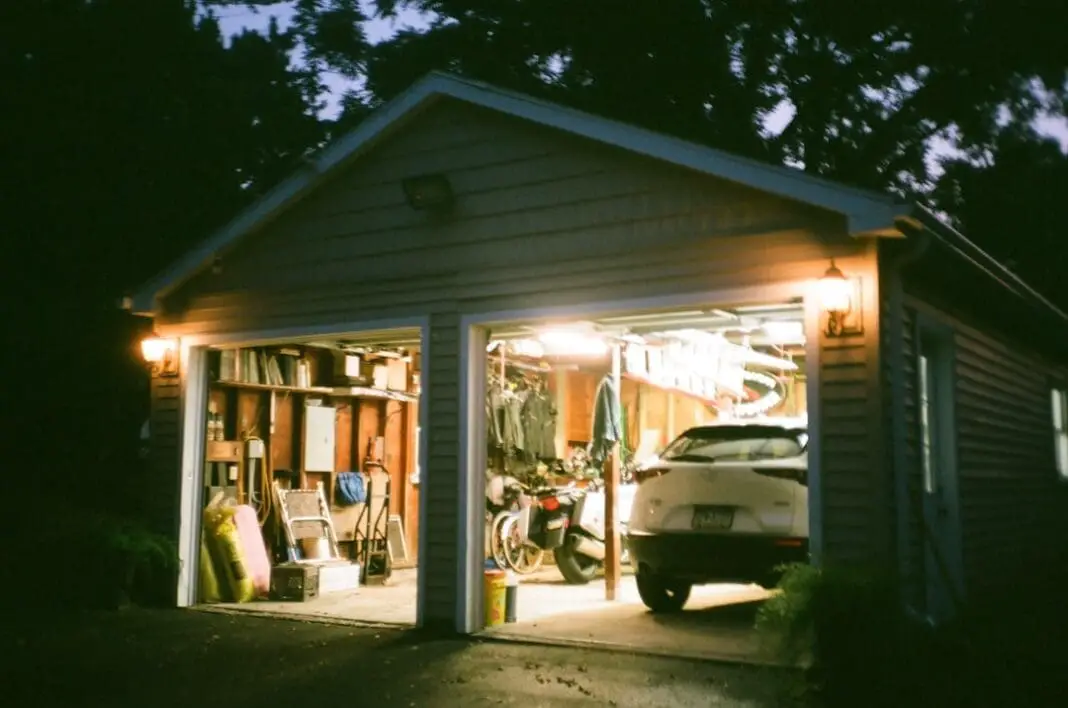
Here’s something most homeowners don’t think twice about: rolling the grill into the garage at the end of summer with the propane tank still attached. You’ve probably done it. I’ve done it. Turns out, firefighters would lose their minds if they saw it. And propane is just the beginning. Your garage is likely full of stuff that fire professionals say has no business being in there, and some of the reasons are genuinely wild.
About 6,600 garage fires happen in the United States every year, and they tend to be worse than fires that start anywhere else in the house. More damage, more injuries, higher dollar losses. The kicker? Most of them are completely preventable. The problem isn’t bad luck. It’s what we’re storing in there.
Propane Tanks Are the Number One Offender
Ask any firefighter what they wish homeowners would stop putting in the garage, and propane tanks come up first. Every single time. The reason is simple but kind of terrifying: propane gas is heavier than air. If the valve on your tank has even a tiny leak, that gas doesn’t float up and away. It sinks. It pools along the floor of your enclosed garage like an invisible puddle, settling into every low corner and crevice.
Now think about what else is in your garage. A water heater with a pilot light. A furnace. Power tools. Even flipping a light switch can create enough of a spark to ignite that invisible layer of gas sitting at floor level. And if a propane tank gets caught in an actual fire? Firefighters have a term for what happens next: BLEVE, which stands for boiling liquid expanding vapor explosion. It’s exactly as bad as it sounds. The tank basically becomes a bomb.
The fix is embarrassingly easy. Just disconnect the tank and leave it outside. Lean it against the side of the house, put it on the patio, whatever. Propane tanks are literally designed to live outdoors. Rain, snow, summer heat, freezing cold. They can handle all of it. They cannot, however, safely sit inside an enclosed space with ignition sources everywhere.
That Red Gas Can on Your Garage Floor Is a Silent Threat
Almost every garage in America has one: a red plastic gas can sitting on the concrete floor with fuel for the lawnmower. It seems harmless enough. But gasoline does something that most people don’t realize. The liquid itself isn’t really the main danger. It’s the vapors, and those vapors behave a lot like propane. They’re heavier than air, they sink to the ground, and they can travel surprisingly far along the floor until they find something hot enough to set them off.
A water heater pilot light across the garage. A furnace kicking on. Static electricity. Even an electric motor from a power tool. The vapors silently drift along the floor and when they reach an ignition source, the fire traces right back to the can. According to fire code guidance, the maximum amount of gasoline you should store in an attached garage is 10 gallons in approved containers, and no flammable liquid storage is allowed in basements at all. Most homeowners don’t need more than two gallons on hand anyway. Storing more is just storing more risk.
And here’s a detail that catches people off guard: empty gas cans count as full when calculating your total storage. An “empty” gas can is actually full of fumes, which are the dangerous part in the first place. If you don’t have a detached shed, even a ventilated outdoor storage box (Rubbermaid makes deck boxes at Home Depot and Lowe’s for under $100) is a massive improvement over the garage floor.
Oily Rags Can Catch Fire All by Themselves
This one is the fact that genuinely shocks people. A rag soaked in linseed oil, tung oil, wood stain, or even motor oil can spontaneously combust. No spark needed. No flame. No ignition source whatsoever. It just catches fire on its own.
Here’s how it works. Linseed oil (the stuff in most wood stains and finishes) oxidizes rapidly when exposed to air. That oxidation generates heat. When you ball up a soaked rag and toss it in a corner or drop it in a pile, the heat has nowhere to go. It builds and builds until the rag reaches ignition temperature. This can happen in just a few hours. One real case involved a homeowner whose drop cloth, soaked in wood stain, caught fire overnight in the garage. By morning the garage was fully engulfed and the fire had spread into the house.
One firefighter with decades of experience said he’s seen this exact scenario dozens of times during his career. You finish sanding a bookshelf, set the rag down on the workbench, go inside for dinner. By the time you smell smoke, the workbench is on fire. The proper way to handle oily rags is to spread them flat in a single layer on concrete outside, out of direct sunlight, and let them dry until they’re completely stiff. If you work with these products regularly, get an OSHA-approved metal container with a self-closing lid. They’re $25 to $40 at Home Depot or on Amazon, and the self-closing lid starves any building heat of oxygen.
Lithium-Ion Batteries Are the Newest Garage Fire Risk
This is the one firefighters are most alarmed about right now. E-bikes, electric scooters, power tool battery packs, golf carts. All of them use lithium-ion batteries, and all of them tend to live in the garage, plugged in and charging.
When a lithium-ion battery fails, it undergoes something called thermal runaway. This is a self-sustaining chemical reaction inside the battery cells where the battery becomes both the fuel and the ignition source at the same time. The internal reaction generates its own heat and doesn’t need external oxygen to keep going. You can douse it with water, smother it, do everything right, and the battery can reignite hours or even days later. Temperatures inside a battery pack during full thermal runaway can hit 1,500 degrees Fahrenheit. Some electric vehicle fire suppression operations have required over 30,000 gallons of water.
Real incidents are piling up. In early 2025, a fire broke out in a home garage in The Village of Summerhill when a lithium-ion battery in a golf cart failed while charging. In another incident, an e-bike charger failure caused explosions at 3 a.m. that woke the entire neighborhood. In a separate case, an e-bike battery fire blocked the exit route and trapped residents. Five people ended up in the hospital. These aren’t freak accidents. They’re becoming a pattern. Firefighters say: never use aftermarket chargers, don’t charge overnight unattended in an enclosed garage, and remove batteries from the charger when they’re done.
Your Paint Shelf Is Basically a Collection of Accelerants
Look at any garage shelf in America and you’ll find a greatest hits of flammable liquids. Old paint cans. Paint thinner. Varnish. Brake fluid. Lighter fluid. Aerosol spray cans. Lawn care chemicals. Pool chemicals. Each one on its own is a risk. Together on one shelf, near a water heater or in direct sunlight, they’re a disaster waiting to happen.
Cans that aren’t sealed tight leak fumes constantly. Containers in direct sunlight heat up and accelerate vapor release. And here’s something fire departments specifically warn about: people who pour chemicals into repurposed soda bottles or food containers. This is a serious problem for two reasons. One, these containers aren’t designed to hold volatile chemicals and can degrade or fail. Two, someone (a kid, a guest, even you after a long day) could mistake the contents for something drinkable.
The smart move is to get rid of anything you’re not actively using. Most counties run hazardous waste collection days a few times a year, and they’re usually free. For anything you’re keeping, store it in the original container, make sure it’s sealed tight, and keep it at least three feet from any water heater, furnace, or heat-producing appliance.
The Electrical Situation in Most Garages Is a Mess
Electrical malfunction is actually the leading cause of garage fires, according to the U.S. Fire Administration. Garages are notorious for overloaded outlets. Think about everything that gets plugged in out there: a chest freezer, power tools, an air compressor, a battery charger, maybe a space heater in winter. Many people daisy-chain extension cords and power strips to make it all work. That’s exactly how wires short out and start fires.
Warning signs include flickering lights, buzzing outlets, circuit breakers that trip frequently, and outlets that feel warm or look discolored. In older homes, the wiring itself may have deteriorated from temperature swings or, believe it or not, rodents chewing through it. If any of that sounds familiar, getting a licensed electrician out there is worth the cost. The U.S. Fire Administration specifically says to plug only one charging appliance into a garage outlet at a time and to avoid extension cords entirely when charging anything.
One More Thing: Check the Door Between Your Garage and House
Most people never think about this, but the door connecting your garage to your house is supposed to be a fire-rated door. Specifically, a 20-minute fire-rated door that is self-closing and self-latching. If yours doesn’t close on its own, or if it’s just a regular hollow-core interior door, it’s not doing its job. If a fire starts in the garage, that door is supposed to buy you time. A standard interior door won’t.
And if anyone has installed a pet door in that garage-to-house door? Firefighters say remove it. A plastic pet flap is basically an open invitation for flames and smoke to enter your living space. One more weekend project worth doing: install a heat detector in the garage. Not a smoke detector (those give false alarms from dust and temperature swings in garages) but a heat alarm that triggers when the temperature spikes. They’re cheap, easy to install, and could make all the difference.
Most garage fires happen in January and February, by the way. Not summer. The cold months are when furnaces and water heaters are working hardest, space heaters come out, and everything is sealed up tight with no ventilation. So if you’re going to do a garage cleanout, now is better than later.

