

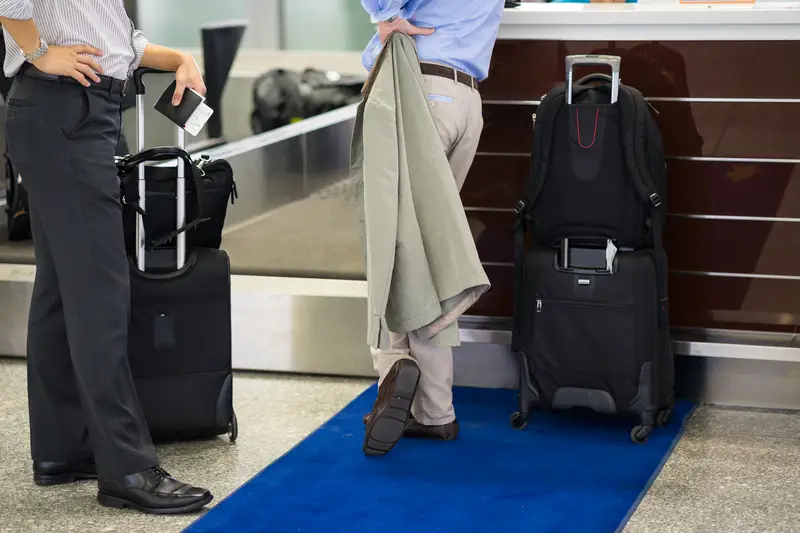
Have you ever wondered why airports seem to attract so many weirdly friendly strangers? You’re standing near your gate, maybe scrolling your phone, and someone walks up with a smile and a favor to ask. Most of us assume the best about people — especially in a place as chaotic and communal as an airport. But that instinct is exactly what con artists are counting on. Airports are basically hunting grounds for scammers, and the tricks they pull go way beyond someone asking you to watch their bag.
The bag favor
Here’s the scenario. You’re waiting in line or sitting at a gate, and a stranger strikes up a conversation. They’re friendly. They claim to be on your flight. Then comes the ask: “Would you mind carrying one of my bags? I’ve got too many and I don’t want to pay the excess baggage fee.” It sounds innocent enough. Maybe you’ve been in that situation yourself — overpacked and dreading the surcharge. So you say yes.
Except when your luggage goes through screening, security pulls you aside. That extra bag? It’s got something in it you definitely didn’t pack. Could be drugs. Could be other contraband. And the person who handed it to you? Gone. Vanished into the terminal crowd. You’re now holding the bag — literally — and trying to explain to airport security that you were just doing someone a favor. Good luck with that conversation.
This is one of the oldest airport scams in the book, and it still works because it relies on basic human decency. The rule is simple: never agree to carry someone else’s luggage. Not for money. Not as a favor. Not even if the person seems perfectly normal and tells a convincing story. Your bag is your bag. That’s it.
Fake QR codes everywhere
That brings up another thing most people don’t think twice about — scanning QR codes. They’re all over airports now. Parking payment kiosks, restaurant menus, Wi-Fi login pages. You pull out your phone, scan, done. But scammers have figured out they can slap a fake QR code sticker right on top of a legitimate one, and most people won’t notice the difference. This particular scam has a name: “quishing,” which is short for QR code phishing.
When you scan one of these tampered codes, you’re directed to a fraudulent website. It might look nearly identical to the real thing. Sometimes the URL is off by a single letter — like an extra “o” in google or a swapped character you’d only catch if you were really paying attention. Once you’re on the fake site, it might ask for personal details, payment info, or install malware on your phone quietly in the background.
James Lee, the chief operating officer of the Identity Theft Resource Centre, recommends a surprisingly low-tech trick: run your finger over the QR code. If it feels raised or like a sticker layered over something else, don’t scan it. You can also just skip the QR code entirely and type the URL directly into your browser. Look for HTTPS at the beginning of any web address. And if a website you accessed from a QR code starts asking for way more personal information than seems reasonable — that’s your cue to close the tab.
Your phone charger is a risk
So your phone’s at 8% and there’s a USB port right there on the seat. Perfect. Except maybe not. “Juice jacking” is a real thing, and it sounds way more dramatic than it is — which is part of the problem. People hear the term and assume it’s some kind of sci-fi scenario that would never actually happen to them. But USB cables fitted with spyware are sold online, and compromised public USB ports can silently transfer malware to your device while it charges.
The data breach happens without any visible sign. No pop-up. No warning. Your phone charges normally, and meanwhile your data is being siphoned off. Lee says the safest move is to always bring your own charger and plug it into a regular power outlet — the kind with prongs, not a USB slot. A portable power bank works too. If you absolutely must use a public USB port, there are small devices called USB data blockers that sit between the port and your cable. They block data transfer and only allow power through.
Power-only USB cables exist too. They look identical to regular cables but are built without the data wires. Worth tossing one in your carry-on if you travel a lot. It’s a $5 fix for a problem that could cost you thousands.
Wi-Fi that isn’t real
Along the same lines, there’s the Wi-Fi problem. Most airports offer free Wi-Fi, and most travelers connect to it without a second thought. But scammers can set up what’s called an “evil twin” network — a fake Wi-Fi hotspot with a name that looks almost identical to the airport’s legitimate one. You connect, you browse, you maybe check your bank account or log into an email. And someone else is watching all of it.
The trick works because people don’t verify. They see a network called something like “ATL_Free_WiFi” and figure that’s it. But the real one might be “ATL-Airport-WiFi” or something slightly different. Lee suggests turning off your Wi-Fi before you even get to the airport, then verifying the correct network name on the airport’s official website or by asking staff at an information desk. If a network doesn’t require any kind of login, that’s actually a red flag — not a convenience.
Bluetooth is a concern too. Keep it off unless you specifically need it. Bluetooth skimmers placed near ATMs or card readers can capture financial information stored on your phone if your Bluetooth is enabled and discoverable. One of those things most people have never even considered, which is kind of the point. Scammers thrive in the gap between what you know and what you assume is fine.
Don’t post that boarding pass
This one stings a little because we’ve all done it — or at least thought about it. You snap a photo of your boarding pass, maybe with your passport and a coffee, post it to Instagram with some caption about your trip. Feels harmless. But that boarding pass contains your full name, your booking reference number, and sometimes more. With just those details, someone could access your airline account, cancel your return flight, or gather enough info for identity fraud.
There’s also the secondary problem that broadcasting your travel plans tells people your home is empty. That’s useful information for the wrong person. Lee points out that criminals can use shared details from your travel documents to create counterfeit documents, too. So it’s not just your trip at risk — it’s your identity.
His advice: keep your travel documents secure, don’t share photos of them online, and dispose of used boarding passes at home — not in an airport trash can where someone could fish them out. And watch for “shoulder surfers” in terminals. People standing a little too close, angling to get a photo of your screen or your documents while you’re checking in. Honestly, it sounds paranoid until you realize how easy it would be to pull off.
The con after you land
Most people let their guard down the second they grab their luggage and head for ground transportation. That’s when another set of scams kicks in. Taxi drivers at some airports are notorious for overcharging tourists, taking longer routes, or — in some cases — skimming your payment card with a modified reader. Car rental companies sometimes tack on surprise fees buried in the contract that you agreed to because you were too tired to read the fine print.
Then there are the impostor drivers. You booked a ride in advance, and someone’s standing in arrivals holding a placard with your name on it. Seems legit. But it might not be the driver you booked. Scammers can spot pre-arranged pickups and position themselves with a handwritten sign, hoping you’ll hop in without double-checking the car details or license plate against your booking confirmation. This happens more often than you’d guess.
Using rideshare apps like Uber or Lyft is generally safer since you can verify the driver’s identity, car model, and license plate through the app before getting in. If you’re renting a car, inspect it thoroughly before driving off — take photos of every scratch and dent, and report existing damage immediately so you don’t get stuck paying for it later. And actually read the rental contract. I know, nobody wants to. But a few minutes of reading beats a surprise $200 charge on your credit card statement three weeks later. The airport is designed to keep you moving fast, and that rush is the single biggest advantage a scammer has. Slow down at every step where money or personal information is involved, and you take that advantage away.

