

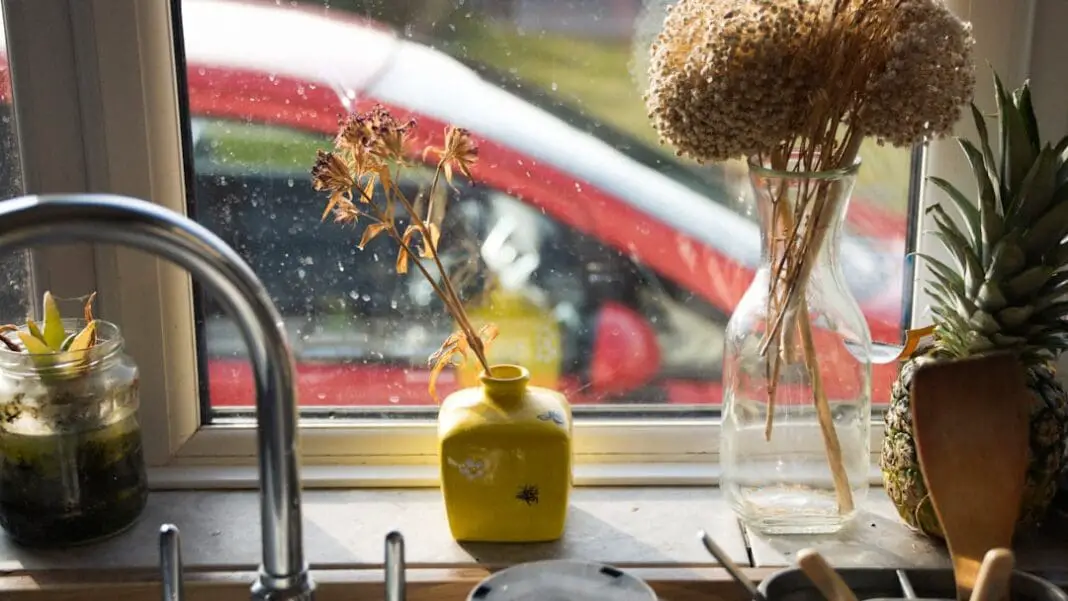
Your kitchen windowsill seems like the most logical spot in the world for certain things. It’s right there. It’s flat. It gets great light. And honestly, most of us treat it like a little shelf for whatever we grab most often — a bottle of olive oil, a candle, maybe some odds and ends we don’t know where else to put.
But here’s the thing nobody really thinks about: that windowsill is essentially a slow cooker. Sunlight streaming through glass gets surprisingly hot — way hotter than the ambient room temperature. It’s doing things to the stuff sitting there that you can’t always see until the damage is done. And some of that damage is worse than you’d expect.
I’m not talking about obvious stuff like “don’t put ice cream on your windowsill.” These are items that millions of Americans leave on or near their kitchen windows every single day without a second thought. Let’s get into it.
Your Olive Oil Is Going Rancid Right Now
This is the big one that nobody talks about. If you keep your olive oil anywhere near your kitchen window — on the sill, on the counter next to it, even on a shelf that catches afternoon sun — you are slowly destroying it.
One food industry writer ran an experiment that tells you everything you need to know. She left a clear bottle of extra virgin olive oil on a kitchen counter in direct sunlight for three months. When she came back to it, the oil had turned so pale it looked like canola oil. The smell? “Old, musty, just OFF.” Meanwhile, the exact same oil from the exact same batch, stored in a dark cupboard, was still completely fresh and vibrant.
Same oil. Same age. The only difference was where it sat.
Here’s why this happens: olive oil breaks down through a chemical process called oxidation, which is triggered by three things — oxygen, heat, and light. A kitchen windowsill delivers all three at once, like a trifecta of destruction. And if your oil is in a clear bottle (which a lot of grocery store brands are), the sunlight goes straight through the glass and accelerates the whole process.
There’s a reason that leading olive oil producers package their products in dark green glass — it’s specifically designed to block light. Historically, virgin and extra virgin olive oil was sold in tin cans for the same reason. These producers aren’t messing around. California Olive Ranch, one of the biggest names in American olive oil, stores all their oil in nitrogen-flushed, temperature-controlled stainless steel tanks. They recommend using a bottle within 30 to 60 days of opening to get peak flavor.
Think about that. Thirty to sixty days. And most of us have a bottle that’s been sitting near the stove or the window for six months.
The ideal storage temperature for olive oil is between 50°F and 70°F — basically wine-cellar conditions. Your kitchen windowsill in July? Not even close. If you buy large bottles, the smartest move is to store the bulk in the coolest, darkest spot in your home and pour a week or two’s worth into a small dark bottle you keep in a cabinet. It sounds fussy, but the difference in taste and quality is dramatic.
And olive oil isn’t even the most fragile one. Avocado oil, walnut oil, grapeseed oil, truffle oil, and sesame oil are all even more sensitive to light and heat. Walnut oil in particular goes rancid fast. If you’re spending $12 to $15 on a nice bottle of walnut or truffle oil and leaving it anywhere near a window, you’re basically pouring money down the drain.
Candles — Even Unlit Ones — Are a Bigger Problem Than You Think
I get it. A candle on a windowsill looks nice. It’s one of those Instagram-ready little touches that makes a kitchen feel cozy and put-together. But fire safety experts are pretty unanimous on this one: it’s a terrible idea, and not just for the reason you’d assume.
The obvious concern with a lit candle near a window is curtains. Brett Trainham, a fire and rescue captain in Colchester, Vermont, points out that curtains, blinds, and shades can catch fire easily from a candle flame on a windowsill. A slight breeze from a cracked window, a draft from the AC kicking on — that’s all it takes to push a flame into fabric.
But here’s the part that surprised me: even unlit candles are a problem.
Forrest Webber, founder of a fireplace distribution company in Albuquerque, explains that concentrated sunlight through glass can heat an unlit candle enough to pool the wax. If the candle is in a glass jar — and let’s be honest, most of those Bath & Body Works and Yankee Candle types are — the glass can get hot enough to crack, leaking hot wax across your windowsill. In a worst-case scenario, pooled wax can actually ignite on its own from sustained heat.
Even if nothing catches fire, you’re still ruining the candle. Direct sunlight bleaches the color right out of candles and dulls their scent over time. That $28 candle you bought that smells like cedar and vanilla? After a few weeks of sitting in a sunny window, it’ll smell like a vague memory of wax. And on a hot day, you might come home to find it slumped over like a sad little wax sculpture glued to the sill.
If you love the look of a candle on the windowsill, switch to a flameless LED candle or just move the real one to a shelf that doesn’t catch direct sun. Your candle — and your curtains — will last a lot longer.
Phone Chargers and Electronics Don’t Belong There Either
This one caught me off guard because I’ve absolutely done this. You’re making dinner, your phone is at 12%, and the outlet closest to the counter is right by the kitchen window. So you plug in, set the phone on the sill, and forget about it for an hour.
Bad move. Forrest Webber — the same fire safety expert — warns that when a phone charger or battery sits on a sunny windowsill, the battery inside can overheat and swell. In some cases, it can start leaking. And in extreme cases, it can trigger a fire. Webber says he’s personally seen batteries melt slightly into the paint of a windowsill. That’s not a typo — melt into the paint.
The reason is that glass magnifies heat. Your windowsill isn’t just warm on a sunny afternoon — it can be genuinely hot. Add in the fact that a phone or tablet is already generating heat while charging, and you’ve got a device baking from both the inside and the outside simultaneously.
Beyond the fire risk, there’s just the basic wear and tear. Batteries that get repeatedly overheated drain faster over time and can become permanently damaged. So even if nothing dramatic happens, you’re shortening the lifespan of a device that probably cost you anywhere from $200 to $1,200. That’s an expensive habit.
And there’s another angle people forget: leaky windows. If you’ve got an older home — or even a newer one with a less-than-perfect seal — moisture can get in around the edges of the window frame. Water and electronics don’t mix. Corrosion to internal components can happen gradually without any visible signs until the device just stops working one day.
The fix is simple. Charge your phone on a countertop, a table, or a nightstand — anywhere with shade and decent airflow. If the only convenient outlet is near a window, at least pull the phone back from the sill and keep it out of direct sunlight.
Bonus: Other Stuff That’s Quietly Getting Destroyed
While those three are the worst offenders, they’re not the only things getting wrecked on kitchen windowsills across America.
Cleaning supplies, for instance. Hugo Guerrero, a certified house cleaning technician, warns that temperature swings and humidity changes mess with the chemical composition of cleaning products, making them way less effective. That bottle of all-purpose spray you keep on the sill above the sink? It might be doing about half of what it should. Sunlight can also pressurize spray bottles, which is a fun surprise nobody wants.
Fruit baskets are another classic windowsill item that backfire. Heat accelerates ripening, so bananas brown faster, apples go soft, and the warmth plus the smell of ripening fruit is basically a welcome mat for fruit flies. One organizer who specializes in home storage says this is one of the most common causes of premature spoilage she sees in clients’ homes.
And if you’ve got plastic picture frames, decorative figurines, or anything made of plastic sitting in a kitchen window, check on them. Prolonged UV exposure turns plastic yellow, makes it brittle, and causes warping. One professional organizer told a story about a client who had a bay window full of giraffe collectibles that had been sitting in the sun for years. Many of them had discolored and cracked beyond repair.
The general rule of thumb, according to just about every expert who’s weighed in on this, is to treat your windowsill like a miniature greenhouse. It’s great for sun-loving plants, stone trinkets, or ceramic pieces. But anything that fades, melts, spoils, or overheats should be somewhere else. A little rearranging now saves you from throwing out a $25 bottle of olive oil, a ruined candle, or a fried phone later.

