

White vinegar sits in nearly every American household, praised as the ultimate natural cleaning solution that can tackle everything from soap scum to coffee stains. But this pantry staple can actually destroy some of your most expensive belongings if used incorrectly. Many homeowners discover too late that vinegar’s acidic nature makes it a terrible choice for certain surfaces and appliances, leading to costly repairs and replacements that could have been easily avoided.
Stone countertops get permanently damaged by vinegar
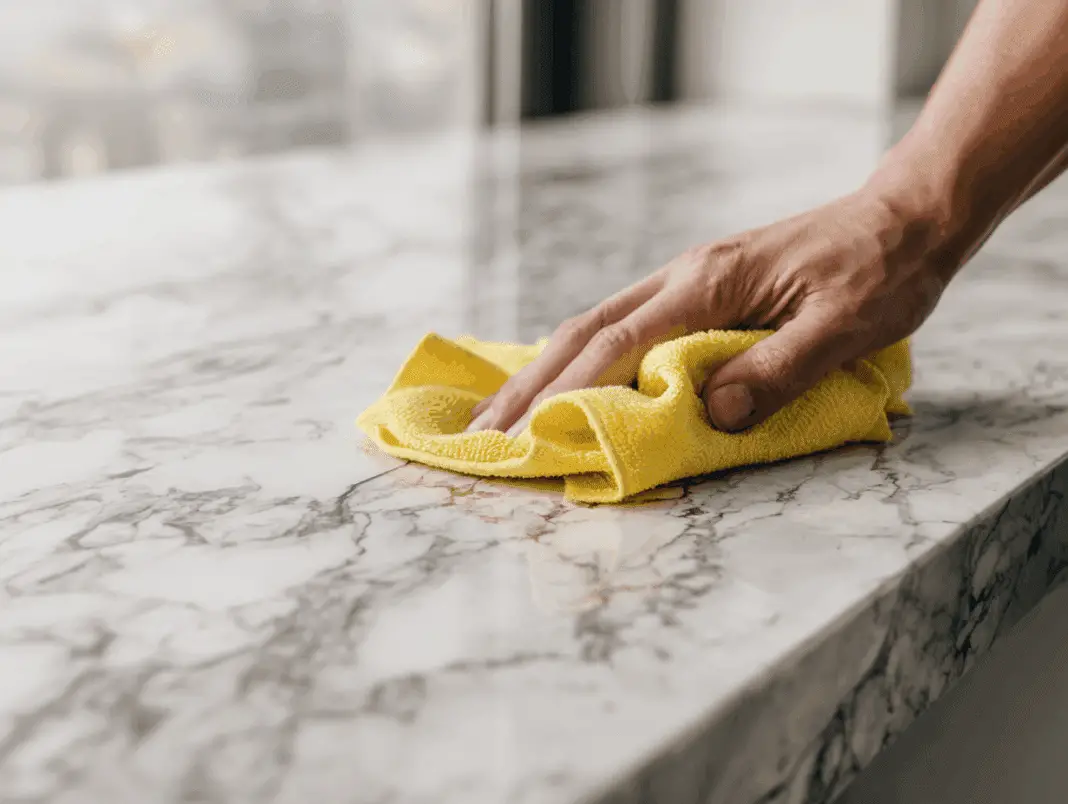
Marble, granite, and travertine countertops represent major investments in most homes, often costing thousands of dollars to install. When vinegar touches these natural stone surfaces, its acid immediately begins eating away at the material, creating permanent etching and dull spots that cannot be polished out. The damage happens within seconds of contact, turning beautiful countertops into expensive eyesores that require professional restoration or complete replacement.
Even sealed granite countertops face problems when exposed to vinegar regularly. The acid breaks down protective sealers applied to the stone, leaving the surface vulnerable to stains and deeper damage over time. Instead of risking thousands in repairs, stick to stone-safe cleaners specifically formulated for natural stone surfaces. These products clean effectively without causing chemical reactions that destroy the stone’s structure and appearance.
Washing machines break down from vinegar exposure
Popular cleaning blogs often recommend running vinegar through washing machines to eliminate odors and mineral buildup, but this advice can seriously damage your appliance. Vinegar attacks the rubber seals, gaskets, and hoses inside washing machines, causing them to deteriorate and eventually leak. Modern washing machines contain numerous rubber components that keep water flowing properly, and vinegar gradually breaks down these essential parts.
The repair costs for rubber seal replacement often exceed several hundred dollars, making vinegar cleaning an expensive mistake. Washing machine manufacturers specifically warn against using vinegar in their owner’s manuals, and some void warranties if vinegar damage is discovered during repairs. Professional washing machine cleaners remove buildup and odors safely without attacking rubber components, protecting your investment while maintaining optimal performance.
Kitchen knives lose their sharpness when cleaned with vinegar
High-quality kitchen knives represent significant investments, with professional-grade options costing hundreds of dollars each. Vinegar’s acidic properties don’t just remove dirt and grime from knife blades – they also corrode the metal itself, gradually eating away at the sharp edge that makes these tools valuable. The corrosion process creates microscopic pitting on the blade surface, making knives duller and less effective at cutting tasks.
Even stainless steel knives suffer damage from regular vinegar exposure, developing rough edges that tear food instead of slicing cleanly through it. The acid attacks the chromium content in stainless steel, compromising the metal’s corrosion resistance and leading to rust formation. Simple dish soap and warm water clean knife blades thoroughly without causing chemical damage, preserving the sharp edges that make quality kitchen knives worth their premium prices.
Steam irons develop internal damage from vinegar cleaning
Many household cleaning guides suggest using vinegar to descale steam irons and remove mineral buildup from their internal chambers. This seemingly logical solution actually destroys the protective coatings inside iron tanks, leading to rapid corrosion of internal metal components. Once the protective lining is compromised, the iron’s heating elements and water channels begin deteriorating, causing the appliance to malfunction or stop working entirely.
Replacement steam irons cost between fifty and several hundred dollars, making vinegar cleaning an expensive cleaning shortcut. Most modern irons include self-cleaning functions that use plain water to flush out mineral deposits safely without damaging internal components. When self-cleaning isn’t available, distilled water prevents mineral buildup naturally while specialized iron cleaners remove existing deposits without attacking protective coatings.
Hardwood floors lose their protective finish to vinegar
Hardwood flooring manufacturers consistently warn against using vinegar on their products, with many companies voiding warranties if vinegar damage is discovered during inspection. The acid in vinegar slowly dissolves polyurethane and other protective finishes applied to hardwood floors, leaving the bare wood exposed to moisture damage, scratches, and staining. Once the protective finish is compromised, floors develop a cloudy, dull appearance that cannot be restored without complete refinishing.
Professional hardwood floor refinishing costs several dollars per square foot, making vinegar cleaning mistakes extremely expensive in large rooms and open floor plans. The damage develops gradually over multiple cleaning sessions, so homeowners often don’t notice the problem until significant deterioration has occurred. pH-neutral floor cleaners designed specifically for hardwood floors clean effectively while preserving protective finishes that keep floors looking beautiful for decades.
Electronic screens develop permanent damage from vinegar exposure
Television screens, computer monitors, and smartphone displays feature specialized anti-glare coatings that improve visibility and reduce eye strain during extended use. Vinegar attacks these delicate coatings, causing them to peel, streak, or develop permanent cloudy patches that interfere with screen clarity. The damage appears gradually at first but quickly spreads across the entire screen surface, making devices difficult or impossible to use effectively.
Replacement screens for large televisions and computer monitors cost hundreds or thousands of dollars, while smartphone screen repairs typically run several hundred dollars depending on the model. Many manufacturers explicitly warn against using household cleaners like vinegar on their electronic displays, recommending only distilled water or specialized screen cleaners. Electronic screen cleaners remove fingerprints and smudges safely without attacking anti-glare coatings or other protective treatments.
Dishwashers suffer rubber seal deterioration from vinegar
Online cleaning advice frequently recommends running empty dishwasher cycles with vinegar to remove mineral deposits and eliminate odors from the appliance interior. While this approach might seem logical for removing buildup, vinegar actually damages the rubber door seals, gaskets, and pump components that keep dishwashers functioning properly. These rubber parts prevent water leaks during operation, and acid damage causes them to crack, warp, or completely fail over time.
Dishwasher seal replacement requires professional service calls that often cost more than the appliance’s annual operating expenses, making vinegar cleaning counterproductive for maintenance budgets. Water damage from failed seals can also affect surrounding cabinetry and flooring, multiplying repair costs significantly. Commercial dishwasher cleaners remove mineral buildup and eliminate odors effectively without damaging rubber components or voiding manufacturer warranties.
Tile grout becomes weaker when exposed to vinegar regularly
Bathroom and kitchen tile grout lines naturally accumulate soap scum, mineral deposits, and mildew that make vinegar seem like an obvious cleaning solution. However, grout is essentially a cement-based material that vinegar slowly dissolves, weakening the bonds between tiles and creating gaps where water can penetrate. This acid erosion happens gradually but consistently with each vinegar application, eventually requiring expensive grout repair or complete tile replacement.
Weakened grout also allows mold and mildew to penetrate deeper into wall cavities, creating health hazards and structural problems that extend far beyond surface cleaning issues. Professional grout restoration services charge several dollars per linear foot for repairs, making prevention through proper cleaning methods much more cost-effective than dealing with acid damage later. Alkaline grout cleaners remove stains and buildup effectively while maintaining grout integrity and preventing water infiltration behind tiles.
Small appliances lose metal components to vinegar corrosion
Coffee makers, blenders, and other small kitchen appliances contain various metal components including heating elements, cutting blades, and internal mechanisms that vinegar can damage over time. While plastic and glass parts might tolerate occasional vinegar exposure, the metal components gradually corrode when exposed to acid, leading to reduced performance or complete appliance failure. Coffee maker heating elements are particularly vulnerable, often developing mineral deposits that vinegar can’t remove without damaging the element itself.
Replacement costs for small appliances might seem manageable individually, but multiple appliance failures from vinegar damage can quickly add up to hundreds of dollars in unnecessary expenses. Many small appliance manufacturers provide specific cleaning instructions in their owner’s manuals, typically recommending mild detergents or specialized cleaning products instead of household acids. Appliance-specific cleaners maintain optimal performance while protecting metal components from corrosion damage that shortens equipment lifespan significantly.
Understanding which household items should never encounter vinegar can save thousands of dollars in repair and replacement costs while preserving the lifespan of valuable appliances and surfaces. When in doubt, check manufacturer recommendations or choose cleaning products specifically formulated for each surface type instead of relying on one-size-fits-all solutions that might cause expensive damage.

