

Here’s something that should make you feel a little guilty about your last grocery purge: a huge chunk of the stuff you threw out was probably still perfectly fine. A 2025 nationally representative survey found that 88 percent of consumers occasionally toss food near its package date because they assume those dates are federally mandated safety warnings. They’re not. In fact, infant formula is the only product in the United States with a use-by date that’s actually required by federal law. Everything else — every “Best By,” “Sell By,” and “Use By” label you’ve ever panicked over — is basically a manufacturer’s educated guess about when a product tastes its best.
Americans are throwing away perfectly good food by the truckload. And some of the items landing in your trash can were never going to go bad in the first place. Here are the foods sitting in your kitchen right now that will outlast your mortgage, your car, and possibly your house.
Honey — The 5,500-Year-Old Snack
The oldest jar of honey ever found is believed to be around 5,500 years old. That’s older than the Great Pyramid of Giza. And it was still edible.
The reason honey basically lives forever comes down to bees being tiny chemical engineers. When bees extract nectar from flowers, enzymes in their stomachs break it down into simple sugars. Then they fan it with their wings inside the honeycomb, evaporating moisture until the liquid is both highly acidic and extremely low in water content. Bacteria literally cannot survive in that environment. It’s a biological dead zone that tastes great on toast.
If your honey has crystallized or turned into a solid, sugary brick, don’t throw it away — that’s actually a sign you bought the real, high-quality stuff. Just place the jar in a bowl of warm water and it’ll return to its liquid state. The one thing that can ruin honey? Leaving the lid off. Honey’s sugars are hygroscopic, meaning they pull moisture from the air. Once water gets in, the whole system breaks down. Keep it sealed, and your great-grandkids can fight over it in their inheritance.
White Rice Lasts Three Decades (But Brown Rice Barely Survives Six Months)
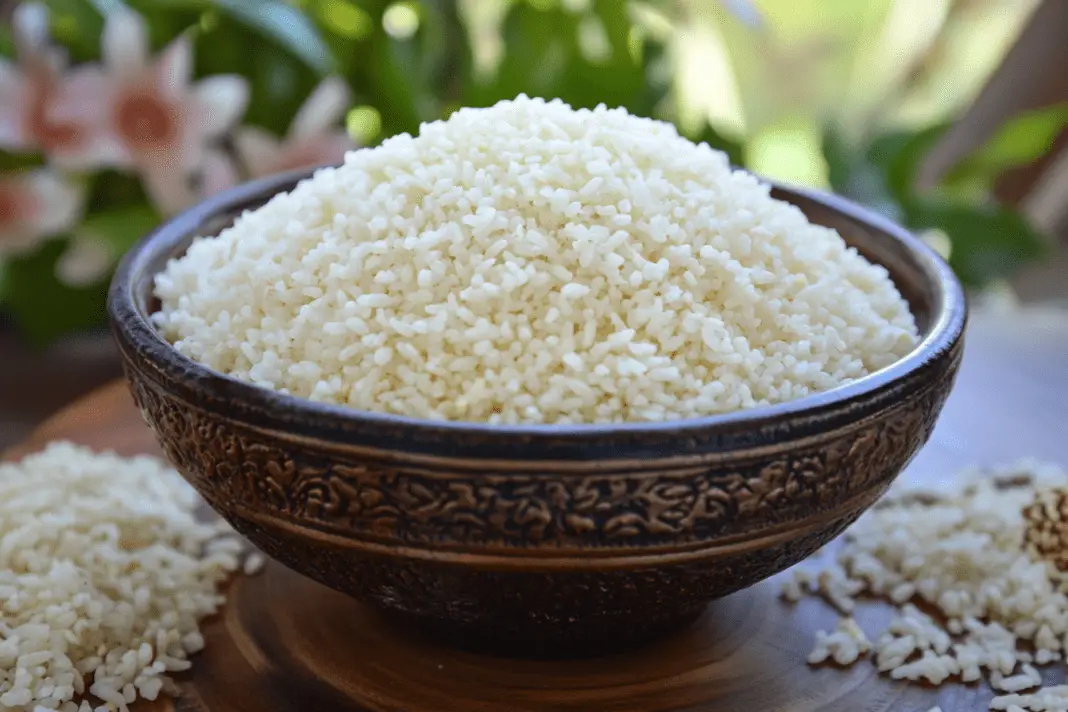
Scientists found that white rice retains its nutrient content and flavor for 30 years when stored in oxygen-free containers at temperatures below 40 degrees Fahrenheit. Even without special containers, it stores safely at room temperature for up to two years. Toss in some food-safe oxygen absorbers and you can push that to a decade at a stable 70 degrees.
Brown rice, though? Six months. Maybe. The natural oils in its bran layer go rancid relatively fast. So the “healthier” rice is also the one most likely to betray you in a pantry emergency. Life is full of these little ironies.
Archaeologists have actually found rice grains dating back thousands of years that were preserved in sealed containers from ancient civilizations. White rice’s high starch content and low moisture make it almost supernaturally resistant to spoilage. If you’re building a doomsday bunker — and honestly, who isn’t thinking about it — white rice belongs at the top of your list.
Salt Is a Mineral, Not a Food — So Yeah, It’s Eternal
This one makes sense when you think about it for half a second: salt is sodium chloride. It’s a rock. It was already millions of years old when you bought it at the store. It’s not going to suddenly “go bad” because it sat in your cabinet for three years past some arbitrary date on the container.
Non-iodized salt like natural sea salt lasts forever, full stop. Humans have been using salt for centuries to preserve other foods precisely because it removes moisture and creates an environment where bacteria can’t grow. There is one small catch, though: if your salt is iodized, the added iodine does degrade over time. Morton Salt notes that iodine reduces the shelf life to about five years. Still an absurdly long time, but not technically immortal.
Sugar Doesn’t Support Life (Bacterial Life, Anyway)
White sugar, brown sugar, powdered sugar — none of them will ever truly spoil. Sugar doesn’t support bacterial growth, period. Most bags have a best-by date of about two years, but that’s purely a quality thing. The sugar itself will outlive you.
The only real enemy is moisture. Get water into your sugar container and you’ll end up with a concrete block of sweetness. And if your brown sugar has hardened into something you could use as a doorstop, here’s a trick: throw a marshmallow in the bag. It softens right back up. No one at the sugar factory is going to tell you that, but it works.
White Vinegar Is Basically Indestructible
White distilled vinegar doesn’t expire. Not in five years, not in fifty. According to The Vinegar Institute (which is apparently a real organization), it remains unchanged to the last drop. Its high acidity makes it self-preserving — no refrigeration, no special treatment, nothing. Buy the biggest jug at Costco and it’ll still be good when your kids are in college.
Now, other vinegars — balsamic, apple cider, red wine, rice — are a little different. They last for years and years, but they’re not quite as invincible as the white stuff. If you notice cloudy sediment forming in a bottle, that’s just bacteria that developed after air exposure. Strain it off and the vinegar is still perfectly fine to use.
Pure Vanilla Extract Gets Better With Age Like a Fine Whiskey
That bottle of pure vanilla extract you bought five years ago? It’s likely better now than when you first cracked the seal. The high alcohol content — typically 35 percent or more — acts as a natural preservative, and the flavor compounds continue to develop over time. It has an indefinite shelf life when stored in a cool, dark place.
Important distinction here: this applies to the real stuff only. Imitation vanilla, the kind with artificial additives, has a much shorter lifespan. So spring for the good bottle. It’s an investment that literally never depreciates.
Popcorn Kernels — Forever Snack Material
Loose popcorn kernels stored in an airtight container in a cool, dry area can last virtually forever. Note: this does not apply to bags of microwave popcorn, which have oils and additives that do expire. We’re talking about plain, unpopped kernels — the kind your grandparents probably had in a mason jar on a shelf somewhere.
The one downside is that kernels tend to lose moisture over time, which makes them less likely to pop properly. You won’t get sick eating old popcorn, but you might get a disappointing bowl with too many un-popped duds at the bottom. The kernels themselves are loaded with fiber and antioxidants, and research has linked their high fiber content to reduced heart disease risk. Not a bad deal for a snack that costs a dollar a bag.
Dried Beans Are Good for Decades (Even if They Get Stubborn)
Researchers at Brigham Young University did something incredible: they tested pinto beans that were 30 years old. The results? Overall quality had declined, sure, but at least 80 percent of consumer panelists still considered every sample acceptable for emergency use. Even more impressive, the protein digestibility remained stable over all three decades.
Dried beans — kidney, black, lima, navy, garbanzo — won’t technically go bad if stored in a cool, dry place. But they start losing nutritional value after two to three years, and most natural vitamins are gone after five. The other issue? Old beans get extremely stubborn about rehydrating. They can take forever to soften. A clever workaround: add baking soda to your soaking water. It exchanges calcium ions with sodium ions, which softens the skin and cuts cooking time. As long as you don’t see bugs, mold, or smell anything funky, those beans from 2018 are still fair game.
Pure Maple Syrup — Mold Isn’t Even a Death Sentence
Unopened pure maple syrup keeps indefinitely, according to both Utah State University and the USDA. Once you open it, you need to refrigerate it, and it’ll last about a year. But here’s the really interesting part: even if your maple syrup develops mold, it’s not necessarily trash.
The Massachusetts Maple Producers Association actually gives instructions for salvaging moldy syrup: bring it to a slight boil, skim the surface, pour it into a clean container, and refrigerate. Done. That’s wildly different from pretty much every other food on earth, where mold means game over. Pure maple syrup also contains vitamins, minerals, and antioxidants with no artificial ingredients, which puts it in a completely different category from that corn syrup stuff shaped like an old lady.
The Biggest Takeaway: Stop Trusting Those Dates
The American food labeling system is, to put it charitably, confusing on purpose. “Best By” means the manufacturer thinks quality might start declining — it has nothing to do with safety. “Sell By” is guidance for the store, not for you. “Use By” is a suggestion about when to eat something for peak quality. And “Freeze By” is just a tip for extending freshness. None of these are safety warnings mandated by the federal government (again, except for infant formula).
The foods on this list aren’t anomalies or weird science experiments. They’re normal, everyday items that most Americans already have in their kitchens. The difference between keeping them and throwing them away isn’t science — it’s just knowing what those dates actually mean. And now you do.

