

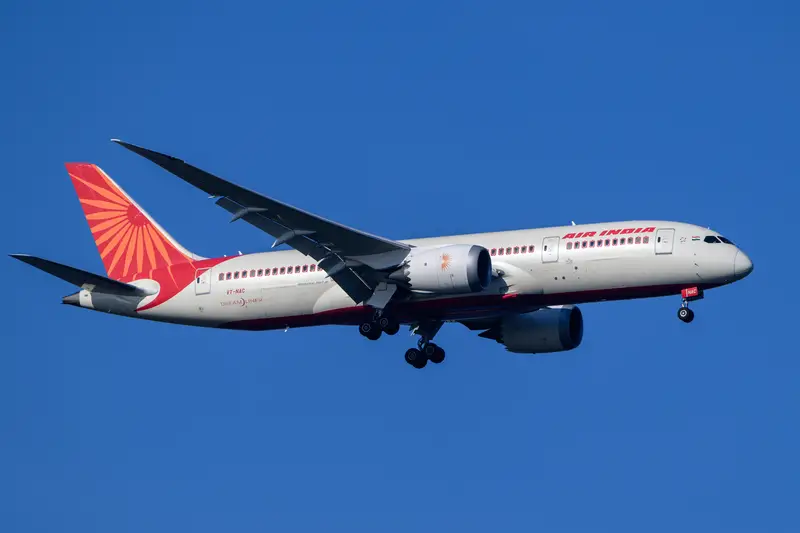
Air travel feels safe until something goes terribly wrong. The recent Air India Flight 171 crash that killed 260 people has left investigators scratching their heads over a disturbing mystery. Just seconds after takeoff, both fuel switches in the Boeing 787 cockpit suddenly moved to “cut-off” position, starving the engines of fuel. The cockpit recording captured one pilot asking why the other “did the cut-off,” but the response was denial. What makes this case so baffling is that these switches require deliberate action to activate, making accidental engagement nearly impossible.
Fuel switches moved mysteriously during takeoff
Picture this scenario: you’re driving your car and suddenly both fuel pumps shut off simultaneously without you touching anything. That’s essentially what happened to Air India Flight 171. The Boeing 787’s fuel control switches require pilots to pull up a lock before flipping them, a safety feature that’s been standard since the 1950s. These aren’t flimsy switches that can be bumped accidentally – they’re built with protective guard brackets and designed to exacting standards that make them highly reliable.
What makes this situation even more perplexing is that both switches moved to the cut-off position almost simultaneously. Aviation experts say it would be nearly impossible to pull both switches with a single hand movement, making accidental deployment extremely unlikely. The preliminary investigation shows that someone in the cockpit deliberately engaged both switches, but the question remains: who did it and why? The switches were returned to normal position within seconds, triggering automatic engine relight, but the damage was already done.
Cockpit voice recording reveals confusing exchange
The most chilling part of this tragedy lies in what the cockpit voice recorder captured. One pilot clearly asked the other why he “did the cut-off,” but the response was an immediate denial. Think of it like asking your passenger why they grabbed the steering wheel, only to have them insist they never touched it. This exchange happened in the most critical moments of flight, when every second counted and confusion could prove fatal.
What’s particularly troubling for investigators is that the recording doesn’t clarify which pilot said what. At the time of takeoff, the co-pilot was flying the aircraft while the captain was monitoring – standard procedure for commercial flights. The voice analysis hasn’t yet identified who spoke each line, leaving a crucial gap in understanding what actually happened. Former NTSB managing director Peter Goelz noted that there’s likely much more on the cockpit voice recorder than what’s been shared publicly, and the full transcript could reveal whether the flying pilot or monitoring pilot was responsible for the switch movements.
Boeing 787 safety features failed to prevent disaster
Modern aircraft like the Boeing 787 are packed with safety systems designed to prevent exactly this type of incident. The Dreamliner’s fuel control switches aren’t just regular toggle switches – they’re engineered with multiple fail-safes. The locking mechanism requires deliberate upward pulling before the switch can be flipped, and protective brackets shield them from accidental contact. These safety features have worked reliably for decades across thousands of aircraft.
However, investigators discovered something concerning in their review of Boeing’s safety records. In December 2018, the Federal Aviation Administration issued a bulletin highlighting that some Boeing 737 fuel control switches were installed with the locking feature disengaged. The same switch design is used in Boeing 787-8 aircraft, including the crashed Air India plane. Since this was only an advisory bulletin and not a mandatory directive, Air India didn’t perform the recommended inspections. This raises questions about whether the switches could have malfunctioned or been easier to accidentally engage than designed.
Emergency systems activated automatically during crisis
When both engines lost power, the Boeing 787’s emergency systems kicked into action automatically. The Ram Air Turbine, a small emergency propeller, deployed from the aircraft’s underside to provide backup power. This system only activates when both engines fail or when all hydraulic systems show critically low pressure – clear evidence that the aircraft was in serious trouble. Think of it as your phone switching to emergency power mode when the battery is nearly dead.
The landing gear remained in the down position throughout the brief flight, which tells its own story about how quickly everything went wrong. Normally, pilots retract the landing gear within about eight seconds of takeoff, typically completing the process by around 400 feet altitude. The fact that the gear stayed down indicates the pilots had no time to follow normal procedures. Aviation experts explain that when facing dual engine failure, pilots focus entirely on finding somewhere safe to land rather than worrying about retracting landing gear.
Pilots attempted desperate engine restart procedure
Despite the chaos, both pilots tried to save the aircraft by restarting the engines. The preliminary report shows they successfully returned both fuel switches to the “run” position, triggering the automatic engine relight sequence. One engine began regaining thrust while the other relit but hadn’t yet recovered full power when the aircraft crashed. It’s like trying to restart your car while it’s rolling down a hill – technically possible but requiring perfect timing and a bit of luck.
The engine restart process on a Boeing 787 isn’t instantaneous. Even under normal conditions, it takes time for engines to spool up and generate sufficient thrust. With the aircraft losing altitude rapidly after takeoff, the pilots were fighting against physics and time. Investigators believe the left engine was restarted first, followed by the right, but the right engine simply didn’t have enough time to recover adequate thrust before impact. The crew’s quick thinking and proper procedures weren’t enough to overcome the initial crisis.
Aircraft maintenance and crew fitness checked out normal
Before pointing fingers at mechanical failure or crew error, investigators thoroughly examined both possibilities. The fuel samples from refuelling tanks tested satisfactory, ruling out contamination as a cause. Both pilots had passed breathalyzer tests before boarding and were cleared as fit to fly. They had arrived in Ahmedabad the day before the flight and received adequate rest – all standard procedures that were followed correctly.
The pilots, based in Mumbai, were experienced professionals following established protocols. There were no red flags in their pre-flight preparations or medical clearances. The aircraft itself was a 12-year-old Boeing 787 Dreamliner that had been operating normally. Initial findings suggest mechanical failure has been ruled out for now, pending further investigation. This elimination of obvious causes makes the fuel switch mystery even more puzzling for investigators trying to piece together what went wrong.
Electronic control systems under investigation spotlight
Modern aircraft rely heavily on electronic control systems that manage everything from fuel flow to engine performance. Some investigators are questioning whether the Boeing 787’s electronic control unit could have triggered the fuel cut-off switches without pilot input. This possibility raises serious concerns about aircraft automation and whether electronic systems can override pilot control in unexpected ways. It’s similar to your smartphone performing actions you never requested due to software glitches.
Former investigator Kishore Chinta raised this critical question about whether the switches could be triggered electronically without physical movement by pilots. If electronic systems can autonomously engage fuel cut-off switches, it represents a significant safety issue that could affect other aircraft. The investigation team is examining this possibility alongside the human factors involved. However, no advisory has been issued for the Boeing 787 or its engines yet, suggesting investigators haven’t found definitive evidence of electronic malfunction.
Video recorders could have solved the mystery instantly
This tragic case highlights a frustrating gap in aviation safety technology. While cars increasingly come with dashcams and security cameras are everywhere, commercial aircraft cockpits still lack video recording systems. Audio recordings can capture conversations and ambient sounds, but they can’t show who actually touched which controls. An over-the-shoulder camera view would have immediately revealed whose hand was on the fuel cut-off switches, ending speculation and focusing the investigation.
The National Transportation Safety Board has repeatedly recommended cockpit video recorders for exactly this reason. Visual evidence would eliminate confusion about voice identification and show precisely what actions each pilot took during the crisis. Aviation experts stress that video recording could prevent the current situation where investigators must rely on incomplete audio evidence and speculation. Until cockpits have video recording capabilities, mysteries like the Air India Flight 171 crash will continue to challenge investigators and leave families without clear answers about what caused their loved ones’ deaths.
The Air India Flight 171 investigation reveals how quickly modern aviation disasters can unfold and how much we still don’t understand about aircraft systems. While investigators continue analyzing evidence and working to identify voices on the cockpit recording, families of the 260 victims wait for answers that may never fully explain this tragedy. The case underscores the need for better safety systems and recording technology to prevent similar mysteries in the future.

