

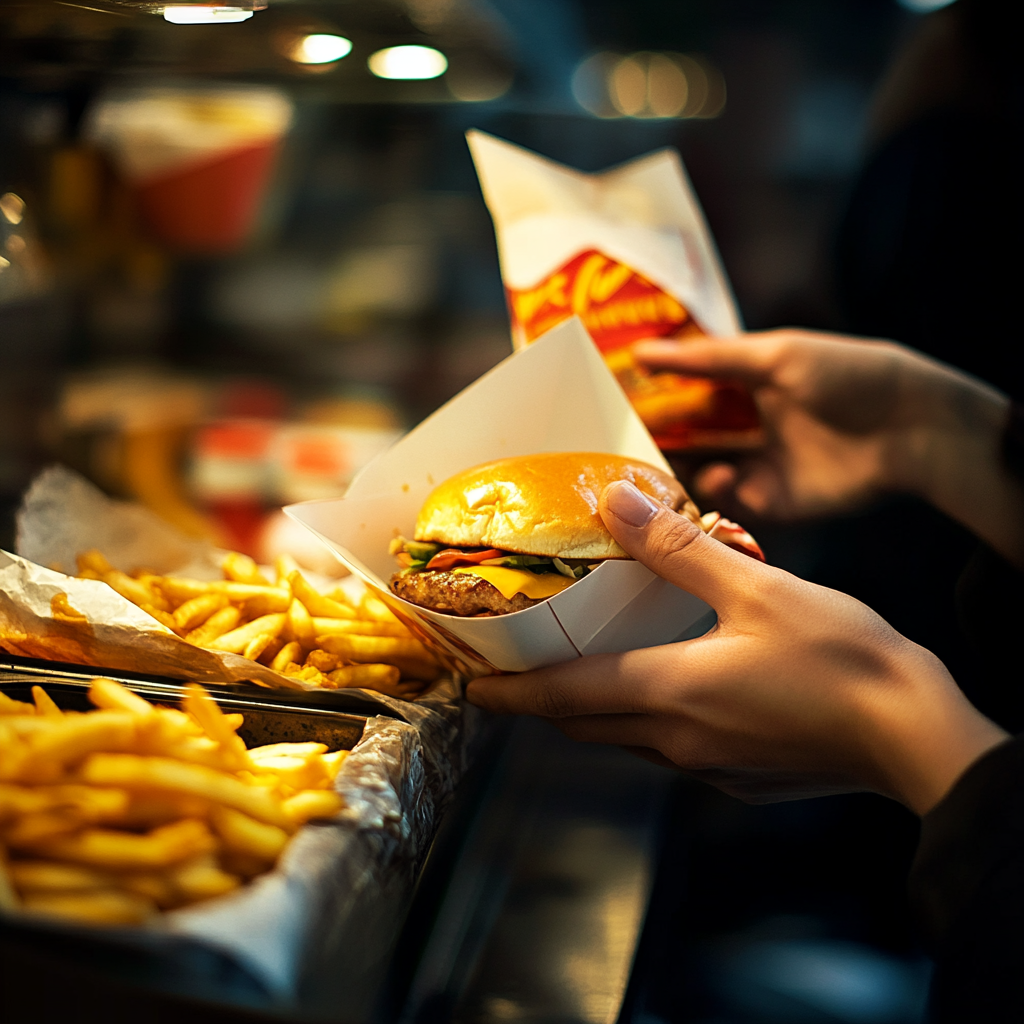
Fast food has become a staple in our modern diet, offering quick and convenient meals on the go. But beneath the colorful wrappers and catchy jingles lies a world of hidden truths that might make you think twice about your next drive-thru visit. From surprising cooking methods to clever marketing tactics, the fast food industry is full of secrets that most customers never suspect.
1. The Not-So-Vegetarian Veggie Burger
Plant-based options have been popping up on fast food menus everywhere, catering to the growing demand for vegetarian and vegan choices. But here’s the kicker: at some fast food chains, these supposedly meat-free options might not be as vegetarian as you think. Take Burger King, for instance. Their plant-based Whopper patties are cooked on the same broiler as regular beef patties, leading to potential cross-contamination.
This means that traces of meat could end up on your veggie burger, much to the dismay of strict vegetarians and vegans. It’s a classic case of good intentions meeting the reality of fast-paced kitchen operations. While the plant-based options are a step in the right direction, it’s clear that fast food chains still have some work to do in truly catering to vegetarian customers.
2. You’re on Candid Camera… at the Drive-Thru
Next time you pull up to a drive-thru, you might want to fix your hair and put on a smile. Why? Because you’re likely being watched and recorded. Many fast food chains have surveillance systems in place at their drive-thru windows, capturing every customer interaction. This isn’t just about security; it’s a way for management to monitor employee performance and customer behavior.
Some employees have even taken to sharing these recordings on social media platforms like TikTok, turning unsuspecting customers into viral sensations. While it’s understandable that businesses want to ensure quality service, this level of surveillance might make some customers feel uncomfortable. So, the next time you’re debating whether to add that extra side of fries, remember: your moment of indecision could be immortalized on camera!
3. The Self-Serve Kiosk Upsell Trick
Have you noticed more self-serve kiosks popping up in your favorite fast food restaurants? There’s a sneaky reason behind this trend. Studies have shown that customers who order from these digital touchscreens tend to spend about 20% more than those who order at the counter or drive-thru. But why? It’s all in the programming.
These kiosks are designed to upsell, offering tempting add-ons and upgrades at every step of the ordering process. Without a human cashier to feel rushed in front of, customers take their time exploring options and are more likely to indulge in extras. The kiosks also use psychology to their advantage, strategically placing high-margin items in prominent positions. So next time you’re faced with a digital menu, be aware that it’s not just taking your order – it’s trying to supersize your spending!
4. Lightning-Fast Cooking Times
Ever wondered how fast food chains manage to serve up hot meals in mere minutes? The secret lies in their high-speed cooking methods. Take McDonald’s, for example. Their hamburgers are cooked in just 38 seconds, while quarter pounders take a whopping 70 seconds. This lightning-fast cooking is achieved using specialized equipment like high-temperature clam grills that cook both sides of the patty simultaneously.
While this speed is impressive, it raises questions about the quality and nutritional value of the food. These rapid cooking methods often rely on pre-processed ingredients and can result in inconsistent cooking. So, the next time you bite into a suspiciously fast burger, remember that speed doesn’t always equal quality. It’s a trade-off that fast food chains make to keep those drive-thru lines moving at breakneck speed.
5. The Order Accuracy Lottery
We’ve all experienced the frustration of discovering our order is wrong after leaving the drive-thru. But did you know that some fast food chains are more likely to get your order wrong than others? In a surprising twist, KFC has been found to have the lowest order accuracy rate at just 79%. This means that roughly one in five orders from the Colonel’s kitchen comes out incorrect.
On the flip side, Arby’s takes the crown for accuracy, with an impressive 89% correct order rate. This discrepancy in accuracy rates across chains highlights the challenges of maintaining consistency in high-volume, fast-paced environments. It also serves as a reminder to always check your order before driving away – you never know when you might be the unlucky recipient of someone else’s meal!
6. The “Broken” Ice Cream Machine Mystery
If you’ve ever craved a McDonald’s McFlurry only to be told the ice cream machine is broken, you’re not alone. This phenomenon is so common it’s become a running joke among customers. But here’s the scoop: those machines often aren’t actually broken. Instead, they’re undergoing a lengthy cleaning process that can take up to four hours to complete.
These machines require frequent cleaning cycles to prevent bacterial growth, and once the cycle starts, it can’t be interrupted. Unfortunately, this cleaning often coincides with peak hours, leading to disappointed customers and frustrated employees. So next time you’re denied your frozen treat, remember: it’s not broken, it’s just taking a really long bath!
7. The Secret Menu Phenomenon
Did you know that most fast food chains have unofficial “secret menus” hiding in plain sight? These off-menu items are known to insiders and savvy customers, but you won’t find them listed on the regular menu board. From the McDonald’s “McGangBang” to In-N-Out’s “Animal Style” fries, these secret items have gained cult followings among fast food enthusiasts.
These secret menus often feature creative combinations of existing menu items or special preparation methods. They add an element of exclusivity and fun to the fast food experience, making customers feel like they’re part of an insider club. However, not all employees may be familiar with these secret items, so be prepared to explain your order if you decide to venture into secret menu territory. It’s like a delicious little scavenger hunt hidden within your favorite fast food joint!
8. The Chemical Cocktail in Your Wrapper
While we often focus on the nutritional content of fast food, the packaging itself might be cause for concern. Many fast food wrappers and containers are treated with perfluorinated chemicals (PFCs) to make them grease-resistant. These chemicals have been linked to various health issues, including cancer, thyroid disease, and developmental problems.
What’s more alarming is that these chemicals can leach into the food, especially when it’s hot and greasy – exactly the conditions you’d find with most fast food items. While some chains have pledged to phase out these chemicals, they’re still widely used in the industry. It’s a stark reminder that sometimes, it’s not just what’s inside the wrapper that we need to worry about, but the wrapper itself.
9. The Flavor Factories Behind Your Favorite Foods
Ever wonder how fast food manages to taste so consistent across thousands of locations? The secret lies not in expert chefs, but in flavor manufacturing. Many of the distinct flavors and aromas in fast food are actually created in specialized chemical plants. These artificial flavors are designed to withstand the rigors of mass production and long-distance shipping.
The reason for this is that the processing required for large-scale food production often destroys natural flavors. To compensate, fast food chains rely on these manufactured flavors to ensure that your burger in New York tastes identical to one in Los Angeles. It’s a bit like movie magic for your taste buds – an illusion of fresh, home-cooked flavor created in a laboratory. Next time you bite into your favorite fast food item, remember that its taste might have more in common with a chemistry experiment than a home-cooked meal!
10. The Customization Catch
Fast food chains often boast about their willingness to customize orders to your liking. Want extra pickles? No problem. Hold the mayo? You got it. But here’s a little-known secret: many of these customizations can be done for free, as long as you know how to ask. The key is to avoid using the word “extra” when making your request.
Instead of asking for “extra cheese,” try saying “Can I get cheese on that?” More often than not, you’ll get the additional topping without being charged extra. This little linguistic trick can save you money and get you more of what you love. However, be mindful not to abuse this knowledge – remember that fast food workers are often under pressure, and excessive customization requests can slow down service for everyone.
11. The Day-Old Dilemma
We all expect our fast food to be fresh, but the reality might be a bit different. Some fast food chains have been known to serve day-old food items, as long as they’re properly stored and reheated. Taco Bell, for instance, has been reported to reheat and serve certain items from the previous day.
While this practice helps reduce food waste and keep costs down, it might not align with customers’ expectations of freshness. The good news is that strict food safety regulations ensure that even day-old fast food is safe to eat. However, if you’re particular about freshness, you might want to stick to ordering during peak hours when turnover is high, or simply ask for your food to be prepared fresh.
12. The Ice Machine’s Dirty Secret
When you order a cold drink at a fast food restaurant, you might want to think twice about the ice. Studies have found alarming levels of bacteria, including fecal coliforms, in the ice served at some fast food establishments. This unsettling discovery was particularly prevalent in the UK, but similar issues have been reported worldwide.
The problem often stems from inadequate cleaning of ice machines and poor hygiene practices among staff. While most fast food chains have strict cleanliness protocols, the reality is that these machines can be overlooked in the hustle and bustle of daily operations. So next time you’re tempted to ask for extra ice in your drink, you might want to reconsider – your beverage might be cleaner without it!
13. The Grill Mark Illusion
Those appetizing grill marks on your fast food burger might not be as authentic as they appear. Many fast food chains add fake grill marks to their burgers to give them that freshly grilled appearance. These marks are often applied during the manufacturing process, long before the patty reaches your local restaurant.
This practice is part of the visual trickery employed by fast food chains to make their products look more appealing. While the burgers are indeed cooked, those perfect grill marks are more about marketing than actual grilling. It’s a reminder that in the world of fast food, appearances can be deceiving. So the next time you’re admiring those picture-perfect grill marks, remember that they might be more akin to a meat tattoo than a sign of flame-grilled goodness!
As we’ve peeled back the wrapper on these fast food secrets, it’s clear that the industry is full of surprises. From questionable hygiene practices to clever marketing tricks, these revelations give us a new perspective on our favorite quick meals. While fast food remains a convenient option for many, being aware of these industry secrets empowers us to make more informed choices. Whether you decide to change your ordering habits or simply appreciate the complexity behind your next drive-thru meal, remember that in the world of fast food, there’s often more than meets the eye – or the taste buds!

